 Weekly · Urbans Post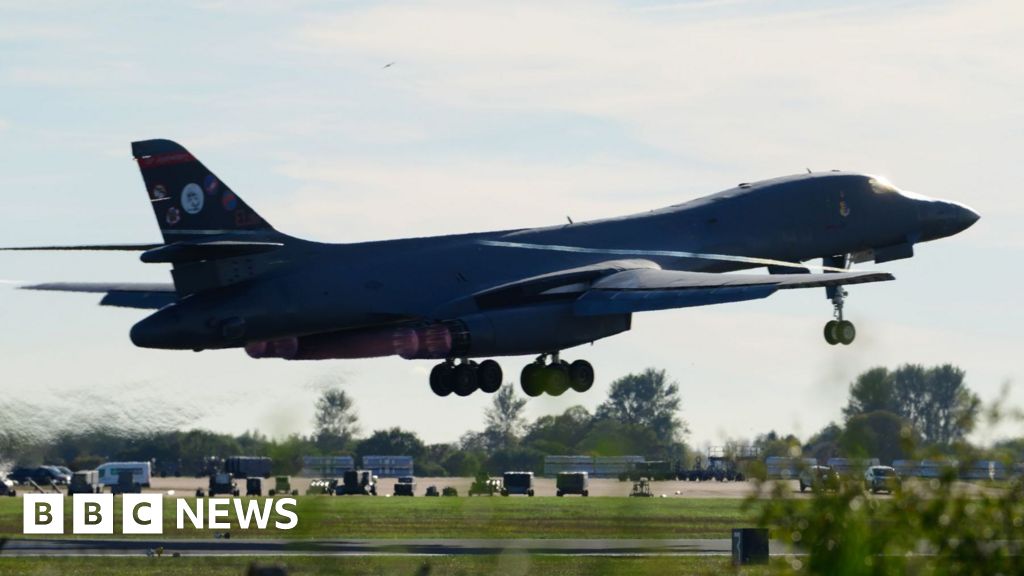
38 minutes ago Vicky Wong Getty Images The US has withdrawn all of its bombers from RAF Fairford Downing Street has insisted RAF Fairford is safe, after the US withdrew all of its bombers from the military base. The Pentagon confirmed on Sunday it had removed its bombers - thought to be about a dozen B-1s - from the base back to their home stations in America. US media reported a new threat led to the bombers being removed, which follows a major incident on 27 September when police were alerted to three "suspicious vehicles" near the airbase.
A No 10 spokesperson said he would not comment on "foreign nations' military operations", but said the base was safe, and pointed to US President Donald Trump's comments last week, where he "praised our police, defence and security services" in relation to the base. He added that Defence Secretary Wes Streeting had said last week, "we have tried and tested approaches to defend our bases around the country and throughout the world". Speaking on Monday, US Secretary of State Marco Rubio said he would not directly tie last week's incident to the decision to pull bombers from RAF Fairford.
He added the US still has full confidence in the security of all its bases and that British authorities have been very cooperative since the incident. RAF Fairford - in the Cotswolds in Gloucestershire - is at the centre of an incident being investigated by counter-terror police. Five men were initially arrested on suspicion of terror offences and subsequently released on bail.
A sixth man, a UK-Iranian national, was also later arrested and released on bail. Whitehall sources have not disputed that the decision from Washington to remove the bombers was in response to the incident at the airbase in Gloucestershire. The BBC has also been told it was a military rather than a political decision - taken at an operational level - and communicated from the US military to its British counterparts.
Earlier on Monday, the New York Times reported US commanders had received new threats about an Iran-backed plot against RAF Fairford according to two US officials. The newspaper wrote that the new information was part of the same threat warnings from three weeks ago, but officials acted quickly after specific details emerged in the past 24 hours. Ezra Cohen, who served as a defence official under Trump's first administration, called the US' decision "prudent".
He told BBC Radio 4's Today programme: "These are very, very unique platforms that aren't being produced anymore, and we have a limited number of them. The B-1 bomber is a strategic asset, and we're going to take steps to protect it from all sorts of threats." Liberal Democrat defence spokesperson James MacCleary called the US' decision to withdraw its bombers "deeply concerning" and called for the government to set out a plan to ensure the country's military bases are "fit for purpose". Days after the incident at RAF Fairford, Prime Minister Andy Burnham said there were "strong indications" that Iran had played a part in the incident but did not provide further details, while US Secretary of State Marco Rubio said on Fox News that it "clearly involve[d] the hands of a foreign actor" without going into further details.
Tehran has strongly denied any involvement. In July, Iran said "any base used for aggression against Iranian territory constitutes a legitimate target for our forces". RAF Fairford, near the village of Whelford in the Cotswolds, has been used as a forward operating location by the USAF for decades.
In recent months, the US has flown B-1 and B-52 bombers from the base for the Middle East, after the UK approved a US request to use it for defensive strikes on Iran. Residents living close to RAF Fairford told the BBC of their relief at the departure of bombers from the airbase, with one local saying she was "thrilled," citing the noise and feeling "increasingly vulnerable" in recent weeks. Another villager, who said he has seen bombs being loaded aboard aircraft from his back garden, said he knew something was happening when he saw planes leaving "one, after another, after another" on Sunday.
Source: BBC